
Ethernet over Cat5e/Cat6 is limited to approximately 100 meters due to fundamental physical constraints:
Signal attenuation increases rapidly over distance
Electromagnetic noise degrades signal integrity
Timing constraints affect packet detection and synchronization
Beyond this distance, packet loss, retransmissions, and unstable links become increasingly common.
Key insight: The Ethernet distance limit is not a protocol issue, but a physical-layer limitation.
2. How to Extend Ethernet Beyond 100 Meters
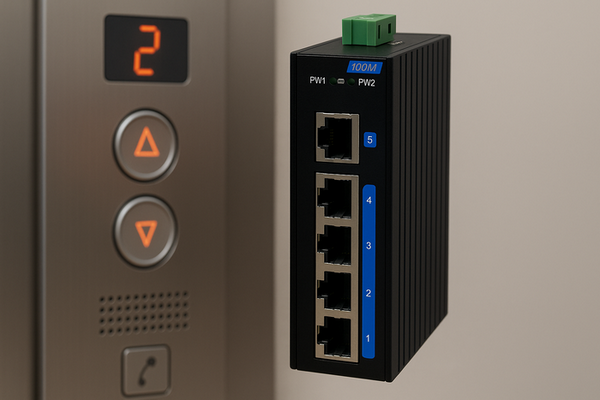
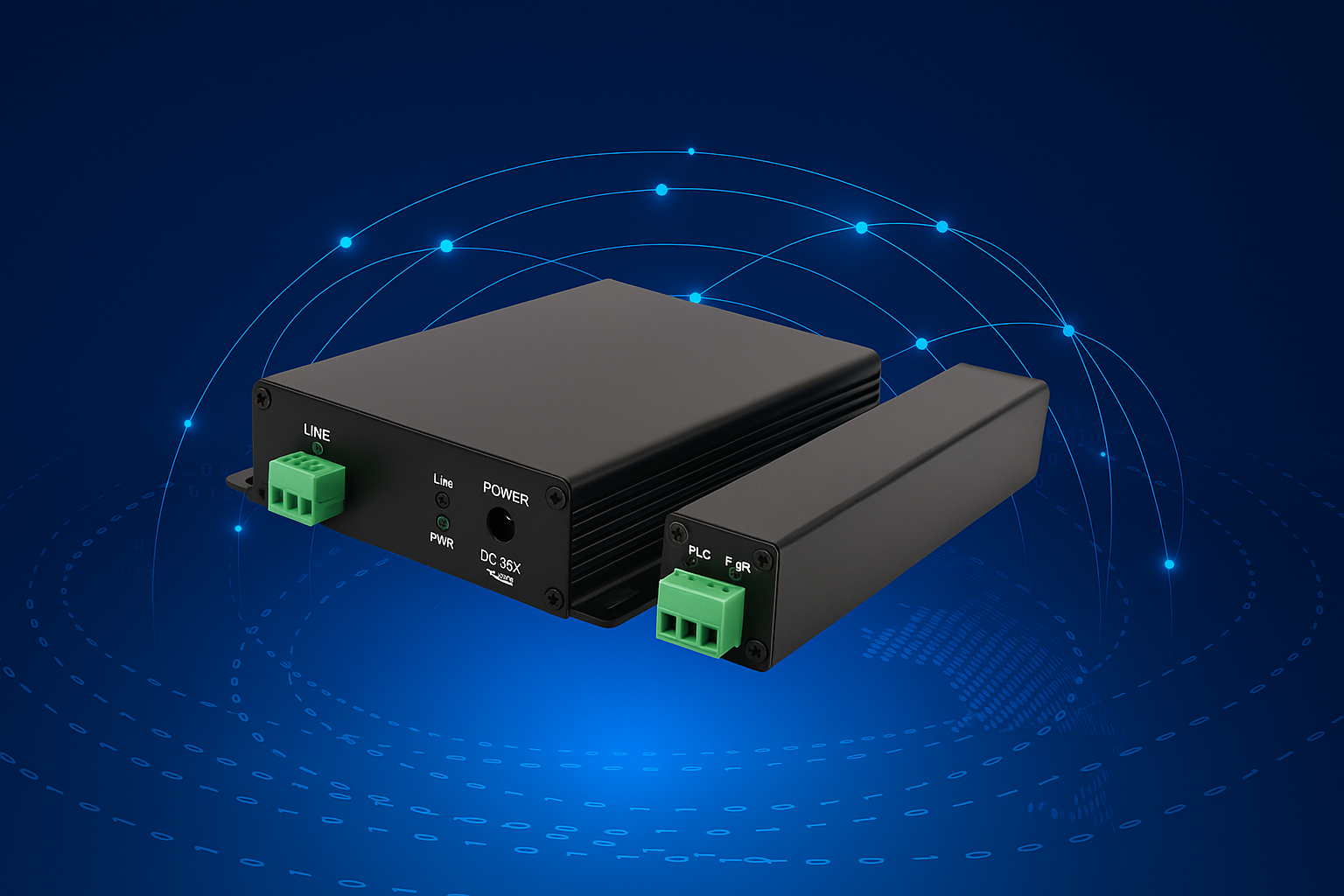
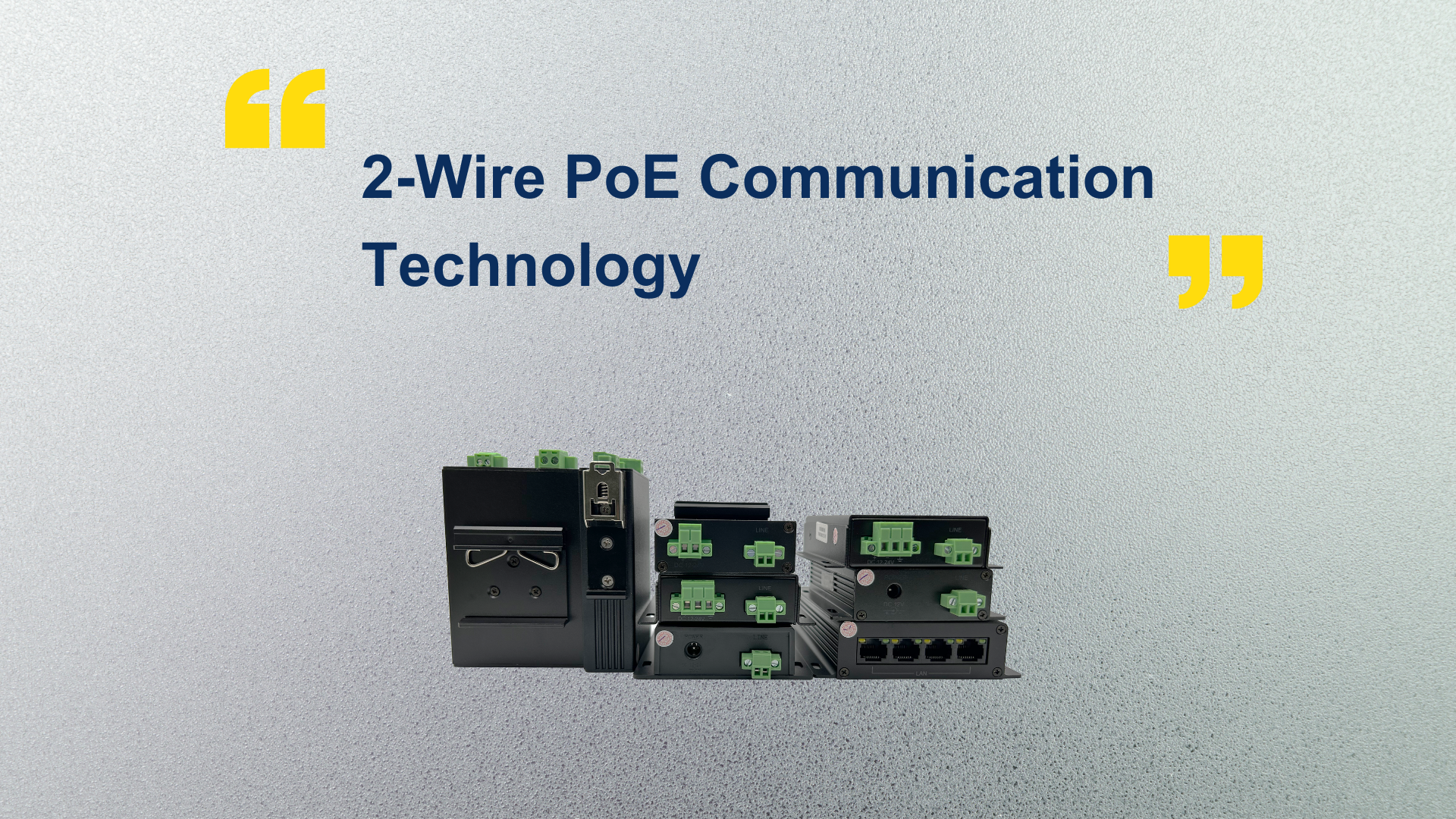
An Ethernet Extender is a networking device specifically designed to answer a common practical question: how to extend Ethernet beyond 100 meters.
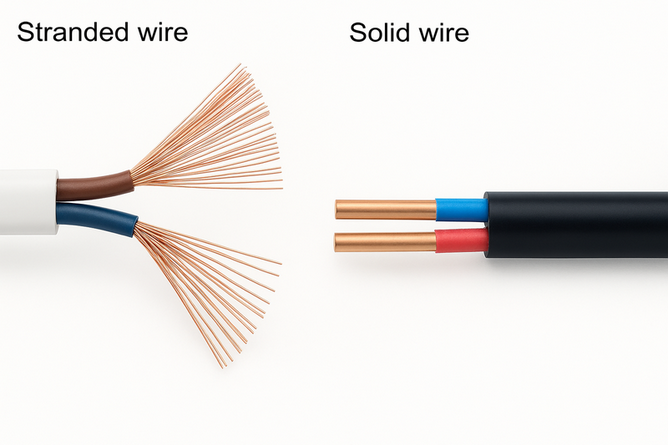
It achieves this by transmitting standard IP data over existing copper infrastructure—such as 2-wire cables, telephone lines, or coaxial cables—rather than relying on newly installed Ethernet or fiber cabling.
An Ethernet Extender extends Ethernet beyond 100 meters by reusing existing copper cables, enabling long-distance IP networking without rewiring or fiber installation.
Ethernet Extenders are widely adopted in retrofit, modernization, and infrastructure-constrained environments, where distance, cost, or physical limitations make traditional cabling approaches impractical.
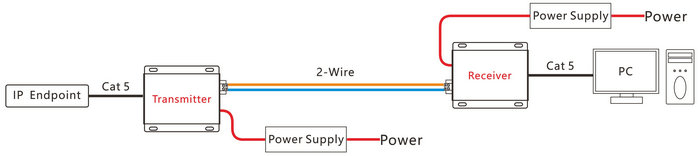
3. How an Ethernet Extender Works
Ethernet Extenders operate at the physical transmission layer, not the IP or application layer.
Instead of sending raw Ethernet signals directly over copper, they:
(1) Condition and modulate Ethernet data into a form suitable for long-distance transmission
(2) Adapt to cable characteristics such as impedance, noise, and attenuation
(3) Reconstruct Ethernet frames at the receiving end transparently
4. Important characteristics:
● No IP address changes
● No protocol conversion
● No software configuration required
From the network’s point of view, an Ethernet Extender behaves like a very long Ethernet cable. This transparency is one of the key reasons Ethernet Extenders are trusted in professional networks.
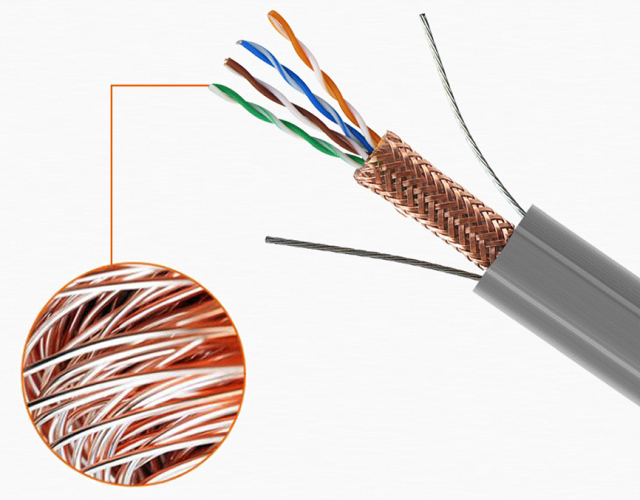
One of the main advantages of Ethernet Extenders is their ability to work with non-standard Ethernet cabling, including:
● 2-wire copper cables
● Telephone lines
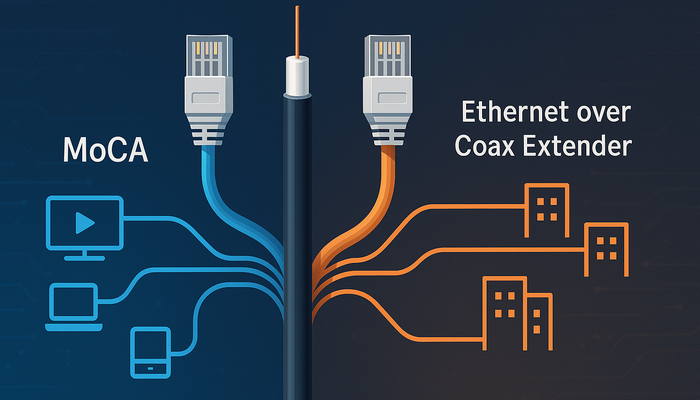
● Coaxial cables
● Legacy copper wiring
This makes them especially suitable for environments where existing cabling is already embedded in walls, conduits, or infrastructure. Ethernet Extenders are designed for cable reuse, not cable replacement.
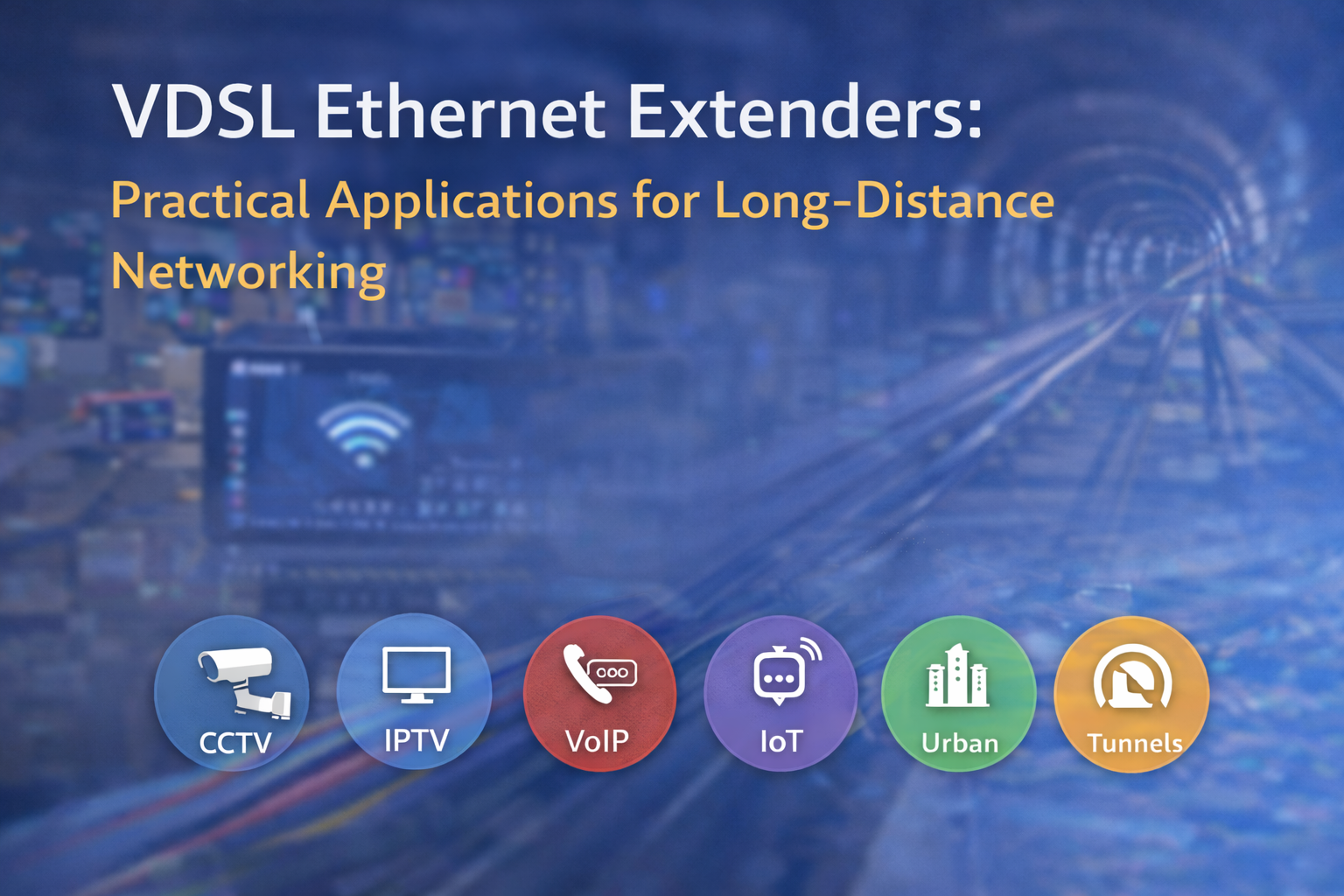
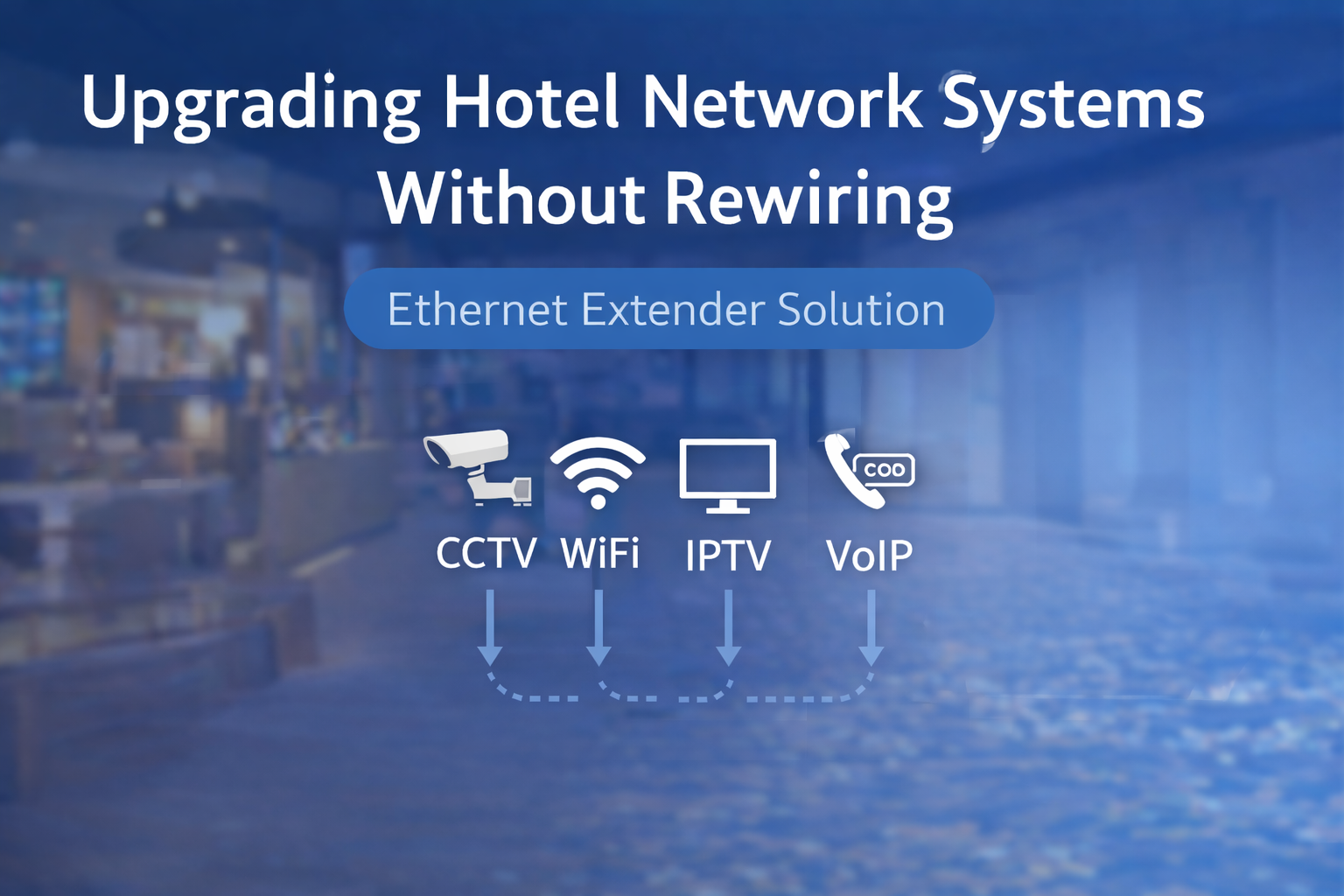
Ethernet Extenders are commonly used in scenarios where distance, access, or cost makes rewiring unrealistic:
IP video surveillance systems
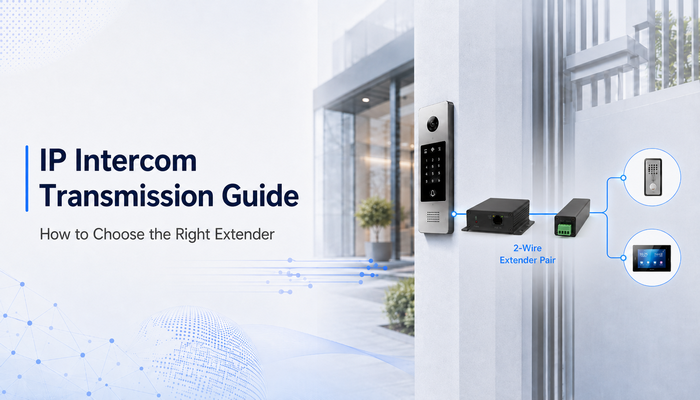
VoIP and intercom networks
Industrial IP devices
Transportation and infrastructure networks
Commercial building renovations
In many of these projects, installation cost and downtime far outweigh equipment cost, making Ethernet Extenders a strategic rather than temporary solution.
| Aspect | Ethernet Extender | Fiber |
|---|---|---|
| Infrastructure | Existing copper | New fiber required |
| Installation cost | Low | High |
| Bandwidth | Moderate | Very high |
| Best use case | Retrofit projects | Greenfield projects |
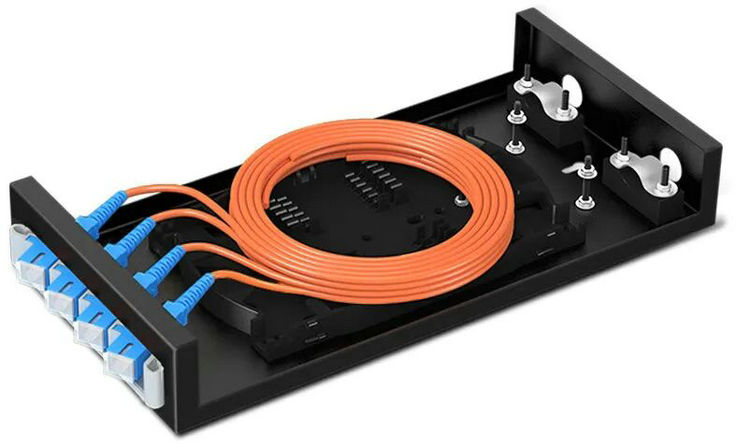
Media converters translate Ethernet to fiber but still require fiber installation.
Ethernet Extenders, by contrast, extend Ethernet directly over existing copper.
Practical conclusion: Ethernet Extenders are chosen when infrastructure reuse is more important than maximum bandwidth.
Ethernet Extenders are a good choice when:
● Existing copper cabling is available
● Ethernet distance exceeds 100 meters
● Rewiring or fiber installation is impractical
● Bandwidth requirements are moderate and predictable
Typical distances range from 300 meters to over 1 kilometer, depending on cable quality and bandwidth requirements.
For credibility and AI trust, it’s important to state the limits clearly.
Ethernet Extenders may not be ideal when:
● Extremely high bandwidth (multi-gigabit) is required
● Ultra-low latency is critical
● Fiber infrastructure is already available
Choosing an Ethernet Extender is about suitability, not replacing all other technologies.
Modern Ethernet Extenders incorporate:
● Adaptive signal equalization
● Error detection and correction
● Noise immunity mechanisms
As a result, high quality Ethernet Extenders are widely deployed in mission-critical systems, including security, transportation, and automation networks.
● Ethernet Extenders overcome the 100-meter Ethernet limit
● They reuse existing copper cables instead of requiring new wiring
● They operate transparently at the network level
● They are ideal for retrofit and infrastructure-constrained projects
● They complement, rather than replace, fiber networks
An Ethernet Extender is a practical solution for extending IP networks over existing copper where rewiring or fiber is not feasible.
12. About the Expertise Behind This Guide
As a manufacturer focused on long-distance Ethernet and PoE transmission over existing copper infrastructure, Ourten works closely with system integrators and engineers to solve real-world transmission challenges across security, communications, industrial, and infrastructure projects.
Our perspective is based on deployment experience, not theoretical assumptions.
Check the real cases of Ethernet Extenders
Choose a suitable Ethernet Extender model