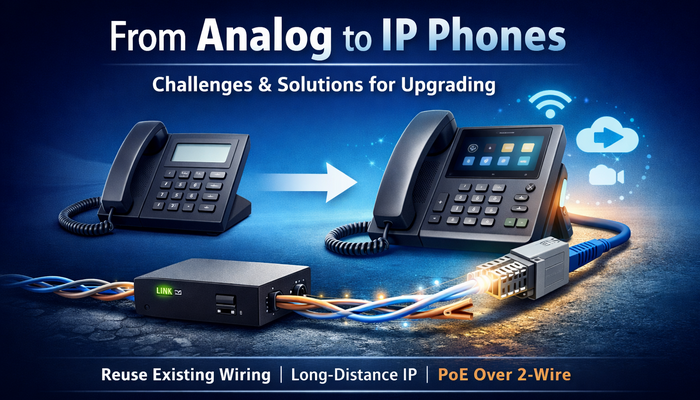
In many building communication projects, traditional analog intercom systems are being upgraded to IP-based intercom systems. This change brings better audio quality, video communication, remote management, SIP integration, and easier connection with modern security platforms.
However, one practical challenge often appears during IP intercom retrofit projects: the existing site may not have Cat5/Cat6 Ethernet cable available.
Many old buildings, apartment blocks, hospitals, schools, factories, parking areas, and access control sites still use telephone lines, 2-wire cables, or other existing copper wiring. Replacing all cables can increase installation cost, extend project time, and disturb daily operation.
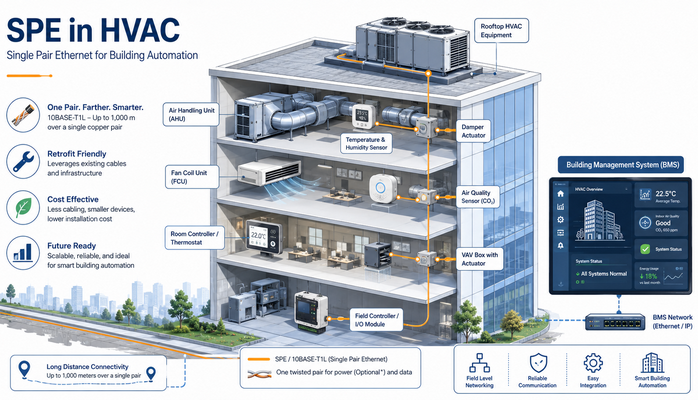
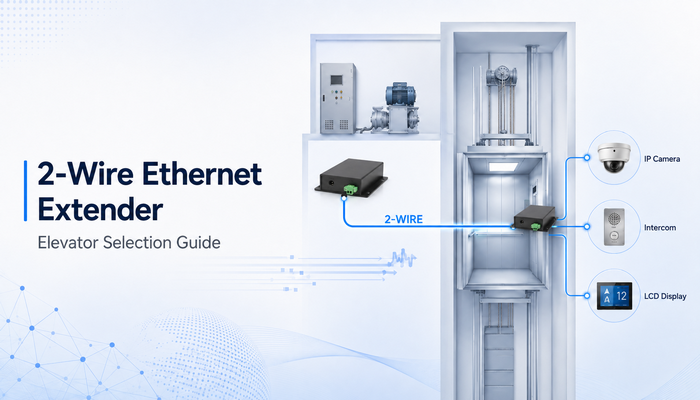
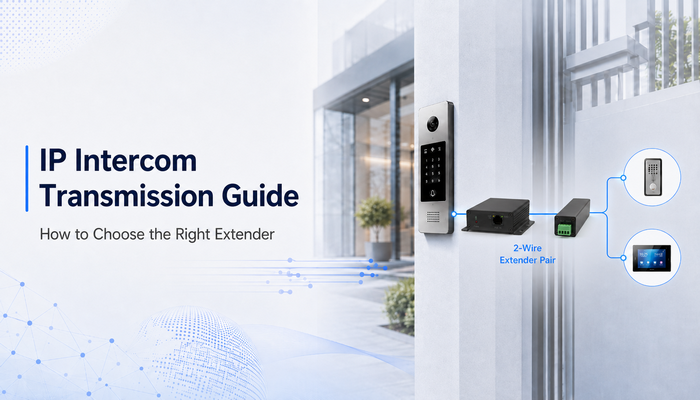
In this situation, choosing the right transmission extender becomes very important. A suitable Ethernet over 2-wire or PoE over 2-wire solution can help installers reuse existing cables and complete IP intercom upgrades with less rewiring.
But different IP intercom projects require different transmission solutions. The best choice depends on the power requirement, cable type, transmission distance, device quantity, and installation environment.
Before choosing a transmission extender, the first question is simple:
Does the IP intercom device already have local power, or does it need power from the network side?
If the intercom terminal already has a local power supply, a standard Ethernet over 2-wire extender is usually enough. It only needs to transmit network data over the existing cable.
If the intercom is a PoE device and needs both power and Ethernet data through the same line, a PoE over 2-wire extender is more suitable.
This first decision helps narrow down the product selection quickly.
Some IP intercom terminals already have their own DC power input or are powered locally by an existing power adapter. In this case, the transmission device only needs to extend Ethernet data from the control room, security center, network room, or main switch to the intercom terminal.
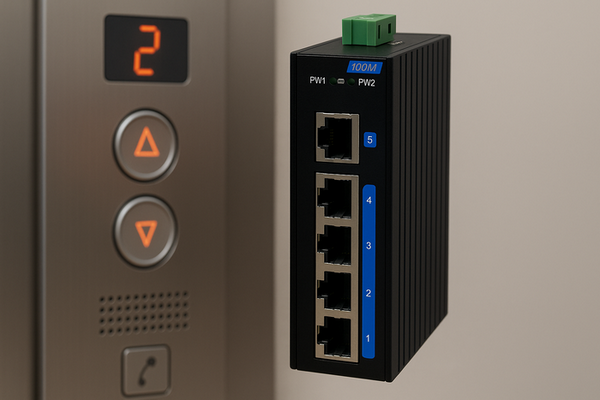
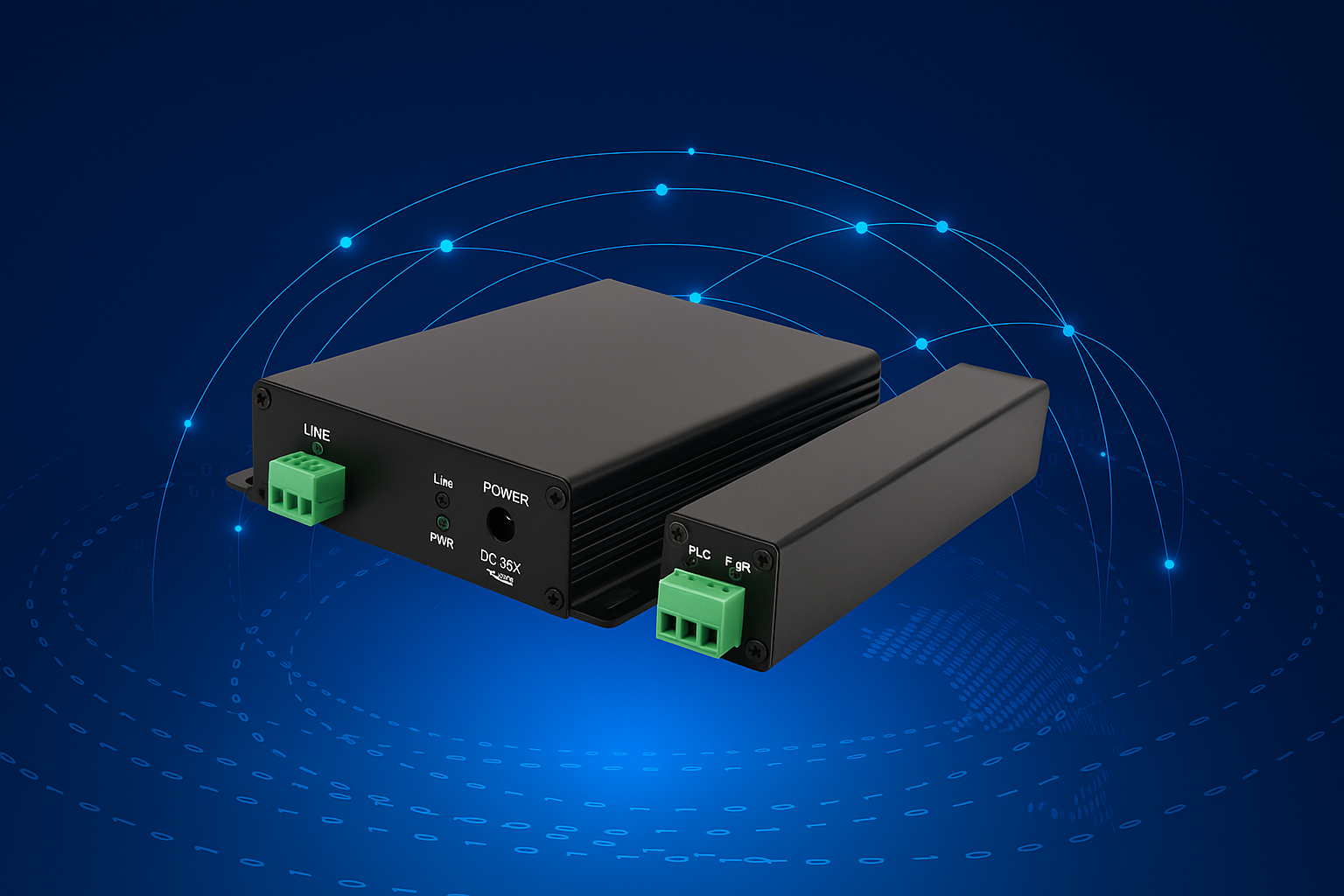
For this situation, an Ethernet over 2-wire extender is usually the right choice. It allows IP data to be transmitted through existing 2-core copper wires, telephone lines, or other available copper cables, helping installers avoid pulling new Ethernet cables.
| Project Need | Recommended Solution |
|---|---|
| IP intercom has local power | OT-PLC101-N |
However, in retrofit projects, there may be no Ethernet cable between the network side and the intercom terminal. If only an existing 2-wire cable or telephone line is available, a standard PoE switch alone cannot solve the wiring problem.
In this case, a PoE over 2-wire extender is more suitable.
It helps transmit both Ethernet data and power through the existing 2-core cable, reducing the need for separate power wiring at the intercom side.
| Project Need | Recommended Solution |
|---|---|
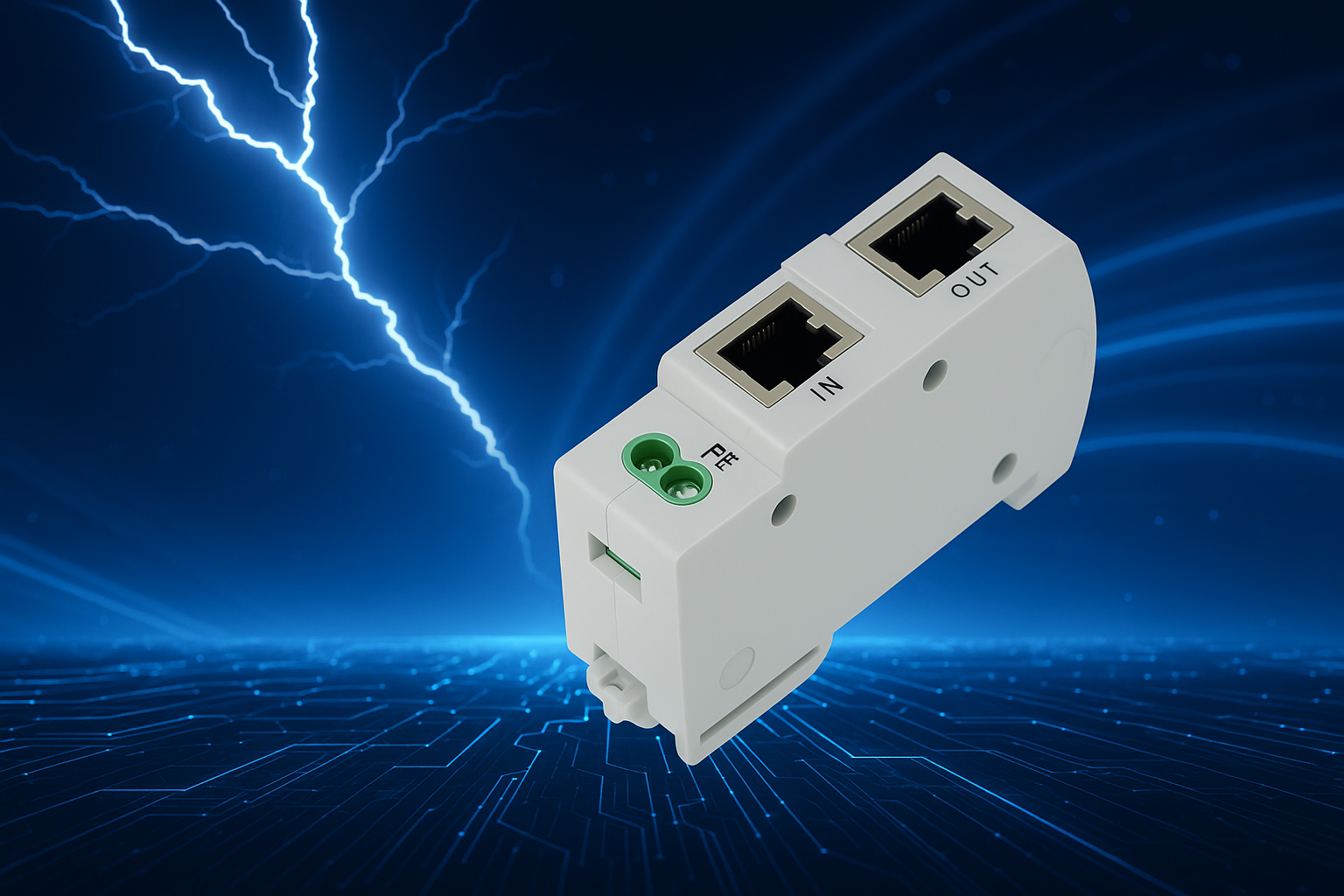
| Standard PoE IP intercom with PoE switch | OT-PLC101POE/OT-PLC101-DC |
| Standard PoE IP intercom with 48VDC power adapter | OT-PLC302POE |
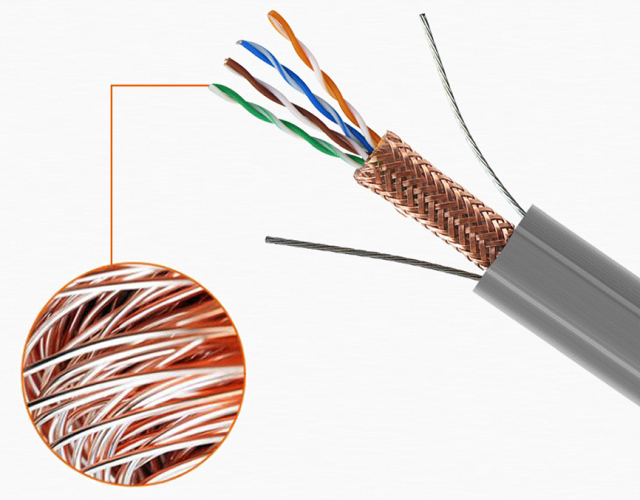
The first thing to check is the cable available on site.
Common existing cables include:
● Telephone line
● Coaxial cable
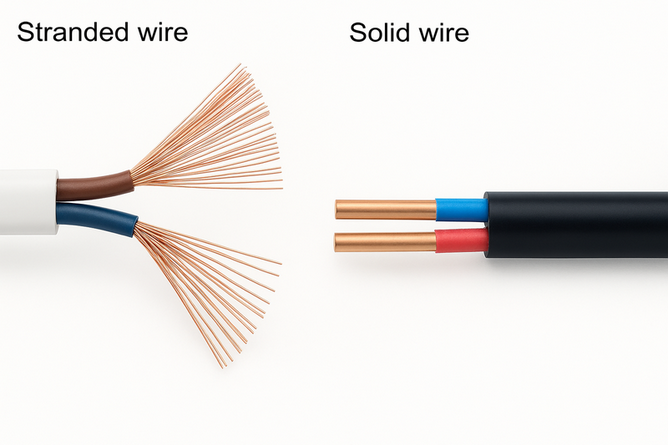
● Other type 2-core copper wire
Different cables have different transmission performance. Cable quality, copper diameter, shielding, joints, and aging condition can all affect the final result.
Before choosing the model, it is better to confirm the cable type.
Different IP intercom projects have different distance requirements. A small building entrance may only require tens of meters, while a factory, parking lot, campus, or remote gate project may need much longer transmission.
When selecting a transmission extender, consider:
● Actual cable length
● Cable quality
● Required bandwidth
● Interference level
Power requirement is one of the most important selection factors.
You should confirm:
● Is the intercom PoE or non-PoE?
● Does the device already have local power?
● What voltage and current does it need?
● How much power is required at the far end?
If the intercom supports PoE and there is no local power, PoE over 2-wire is usually the most convenient option.
If the intercom has local power, data-only Ethernet over 2-wire may be more cost-effective.
Typical IP Intercom Retrofit Applications
Many apartment buildings still use analog intercom or telephone-based systems. When upgrading to IP intercom, installers often face the problem of old wiring.
If existing telephone lines or 2-wire cables are still usable, a 2-wire Ethernet extender can help connect the new IP intercom system without replacing all cables.
Hospitals and care facilities may need to upgrade nurse call terminals, room intercoms, corridor displays, and emergency communication points.
In these environments, reducing construction work is very important because daily operation cannot be interrupted for a long time.
Using existing 2-wire cabling can help simplify IP communication upgrades and reduce installation disturbance.
Factories may need IP intercoms at gates, workshops, control rooms, warehouses, and production areas. These locations may be far apart, and rewiring can be difficult.
A long-distance Ethernet extender can help transmit IP intercom signals over existing copper wiring and improve communication coverage.
Parking lots and gate entrances often require IP intercoms, access control, and cameras at the same point.
If the existing cable is limited, a multi-port transmission solution can help connect several devices through one available cable path.
Choosing the right transmission extender for an IP intercom retrofit project should start from the actual site condition, not only from the product model.
The key questions are:
● Does the IP intercom need data only, or power + data?
● Is the intercom a standard PoE device?
● What type of existing cable is available?
● What is the transmission distance?
● How many IP devices need to be connected?
● Is the installation environment simple or complex?
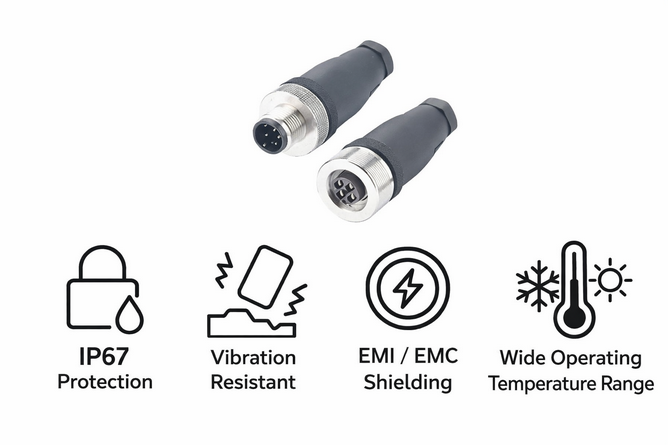
● Is there strong interference, outdoor exposure, or limited installation space?
For many IP intercom retrofit projects, Ethernet over 2-wire and PoE over 2-wire solutions can help reuse existing telephone lines or 2-core copper cables. This reduces rewiring work, shortens installation time, and makes IP intercom upgrades more practical.
Contact Ourten with your cable type, transmission distance, intercom model, power requirement, and installation environment. Our team can help recommend a suitable Ethernet over 2-wire, PoE over 2-wire, or customized transmission solution for your application.