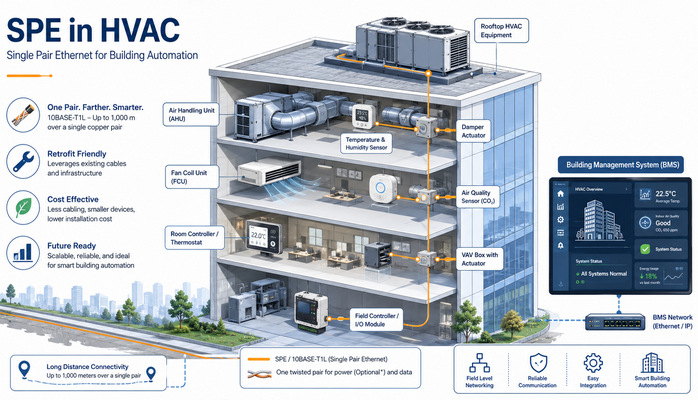
What Is SPE, and Why Is HVAC Starting to Pay Attention?
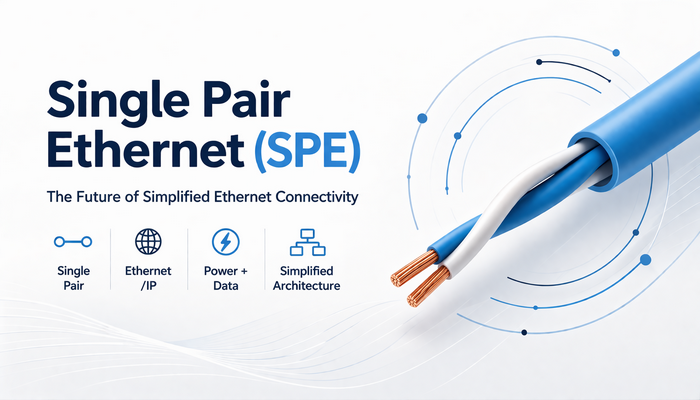
SPE, short for Single Pair Ethernet, is an Ethernet communication technology that transmits data over a single pair of copper wires. Unlike traditional Ethernet, which usually requires two or four pairs of wires, SPE only needs one pair, making it highly suitable for sensors, controllers, actuators, and other field-level devices in building automation systems.
In HVAC systems, many devices are widely distributed across floors, machine rooms, ceilings, air ducts, equipment rooms, and remote areas. These devices may include temperature and humidity sensors, air damper actuators, VAV controllers, fan coil unit controllers, air handling unit controllers, and energy monitoring modules.
Traditional HVAC networks often rely on RS-485, BACnet MS/TP, LonWorks, or analog 4-20mA architectures. However, as smart buildings require more data collection, remote diagnostics, energy optimization, and cloud-based management, HVAC systems are gradually moving from traditional fieldbus networks toward IP-based architectures.
The value of SPE is clear: it can extend Ethernet connectivity to the HVAC field level while reducing the cost and complexity of new cabling. For retrofit projects, SPE also offers the possibility of reusing existing building wiring, helping reduce installation time, labor cost, and material waste.
In modern BMS, or Building Management Systems, HVAC controllers are no longer just local control nodes. They need to communicate in real time with supervisory platforms, cloud systems, energy management systems, and maintenance platforms.
SPE allows HVAC controllers to connect to IP networks through a single pair of wires, making them easier to access, monitor, and maintain remotely.
For HVAC systems, this means fan coil unit controllers, air handling unit controllers, zone controllers, and other equipment can be more easily integrated into an IP-based network architecture, instead of relying only on traditional serial fieldbus networks.
One of the biggest challenges in commercial buildings, hotels, hospitals, schools, and office buildings is that many HVAC systems have already been running for years. Existing wiring may include RS-485, LonWorks, control wires, or ordinary twisted-pair cables.
If these buildings need to be fully upgraded to traditional Cat5 or Cat6 Ethernet, new cabling can be expensive, disruptive, and difficult to install.
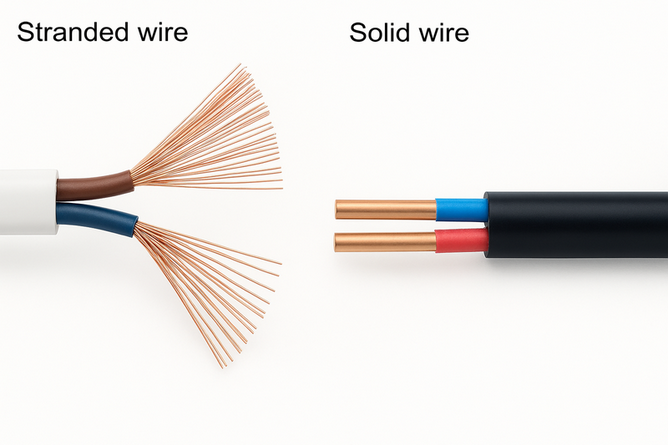
SPE helps solve this problem by enabling data transmission over a single wire pair. In many retrofit scenarios, it may also be possible to reuse existing 2-wire infrastructure.
For HVAC retrofit projects, this is especially valuable. Compared with pulling new Cat6 cables, SPE can help building owners and system integrators complete IP-based upgrades with less installation work.
Intelligent HVAC operation depends on large amounts of field data, such as temperature, humidity, CO₂, pressure differential, air quality, occupancy status, valve status, fan status, and energy consumption.
Traditional sensors are usually connected to controllers through analog signals or fieldbus networks, which may limit data granularity and make unified network management more difficult.
SPE allows more sensors and actuators to directly join IP networks, enabling continuous communication from field devices to the cloud.
In HVAC systems, this capability can be used for:
Temperature and humidity sensors
CO₂ and air quality sensors
Air damper and valve actuators
VAV boxes, AHUs, FCUs, and other equipment
Energy monitoring modules
Remote fault diagnostics and equipment status monitoring
When these devices communicate through a unified IP network, BMS platforms can perform more accurate energy optimization, comfort control, and predictive maintenance.
Traditional Ethernet is usually limited to 100 meters. However, HVAC equipment is often distributed across different floors, basements, rooftop plant rooms, remote equipment rooms, or large building campuses.
For commercial buildings, airports, hospitals, industrial parks, and campus projects, distance limitations can increase the need for intermediate switches, extra power points, and additional cabling.
10BASE-T1L is one of the SPE standards that is highly suitable for building automation. It can support long-distance communication over a single pair of wires.
For HVAC contractors and system integrators, SPE can reduce the number of intermediate devices required for remote control points and make distributed equipment easier to connect to a unified network.
One of the biggest barriers in HVAC retrofit projects is not always the controller itself, but the wiring. Pulling new cables through ceilings, risers, machine rooms, pipe layers, and finished areas can cause downtime, damage to interiors, higher labor costs, and project delays.
SPE can transmit data over a single wire pair, and in some cases, reuse existing 2-wire cabling. This makes it especially useful for old building retrofits, BMS upgrades, and IP-based HVAC modernization.
Traditional HVAC communication architectures often involve fragmented protocols, complex gateways, and data silos. SPE extends Ethernet to the field level, helping reduce protocol conversion layers and making it easier for controllers, sensors, and actuators to integrate with BMS platforms, cloud systems, energy platforms, and maintenance tools.
By supporting more direct edge-to-network connectivity, SPE can help improve data visibility and make building assets easier to monitor and optimize.
When HVAC devices can be directly connected to a BMS through an IP network, maintenance teams can more easily perform remote monitoring, parameter adjustment, fault diagnosis, and firmware management.
For commercial building operators, this means fewer on-site troubleshooting visits, faster fault response, and better energy management.
SPE can also support more standardized device networking, making it easier to collect status updates and enable predictive maintenance across different HVAC subsystems.
Commercial buildings are increasingly focused on energy consumption, carbon reduction, occupant comfort, and remote management. HVAC is one of the most important parts of building energy consumption, so data visibility, precise control, and intelligent optimization are becoming more important.
SPE provides HVAC systems with a lighter and more scalable networking method. It is not just a cabling alternative, but also a key connectivity foundation that helps buildings move toward smarter, more digital, and more energy-efficient operation.
The development of SPE products and technologies shows that Single Pair Ethernet is gradually expanding from industrial automation into smart buildings and HVAC applications.
At the engineering level, SPE is being used for long-distance Ethernet connectivity, existing 2-wire cable reuse, controller networking, sensor access, and field-level building automation communication.
At the system level, SPE supports the broader trend of IP-based building management. It helps bring more HVAC field devices into digital platforms, enabling better monitoring, control, energy analysis, and remote maintenance.
This shows that SPE in HVAC is no longer just a concept. It is moving into real products, real retrofit projects, and real building automation applications.
In actual HVAC projects, SPE can be deployed in several common ways.
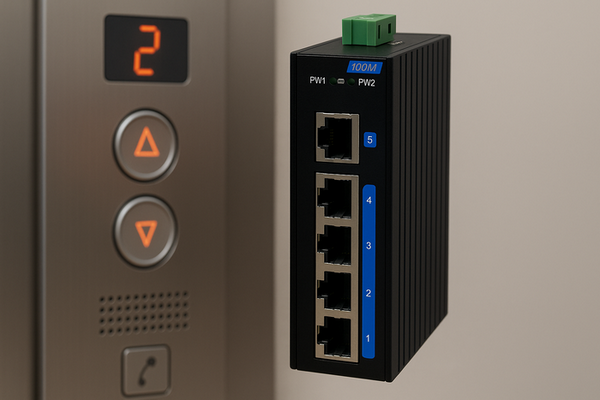
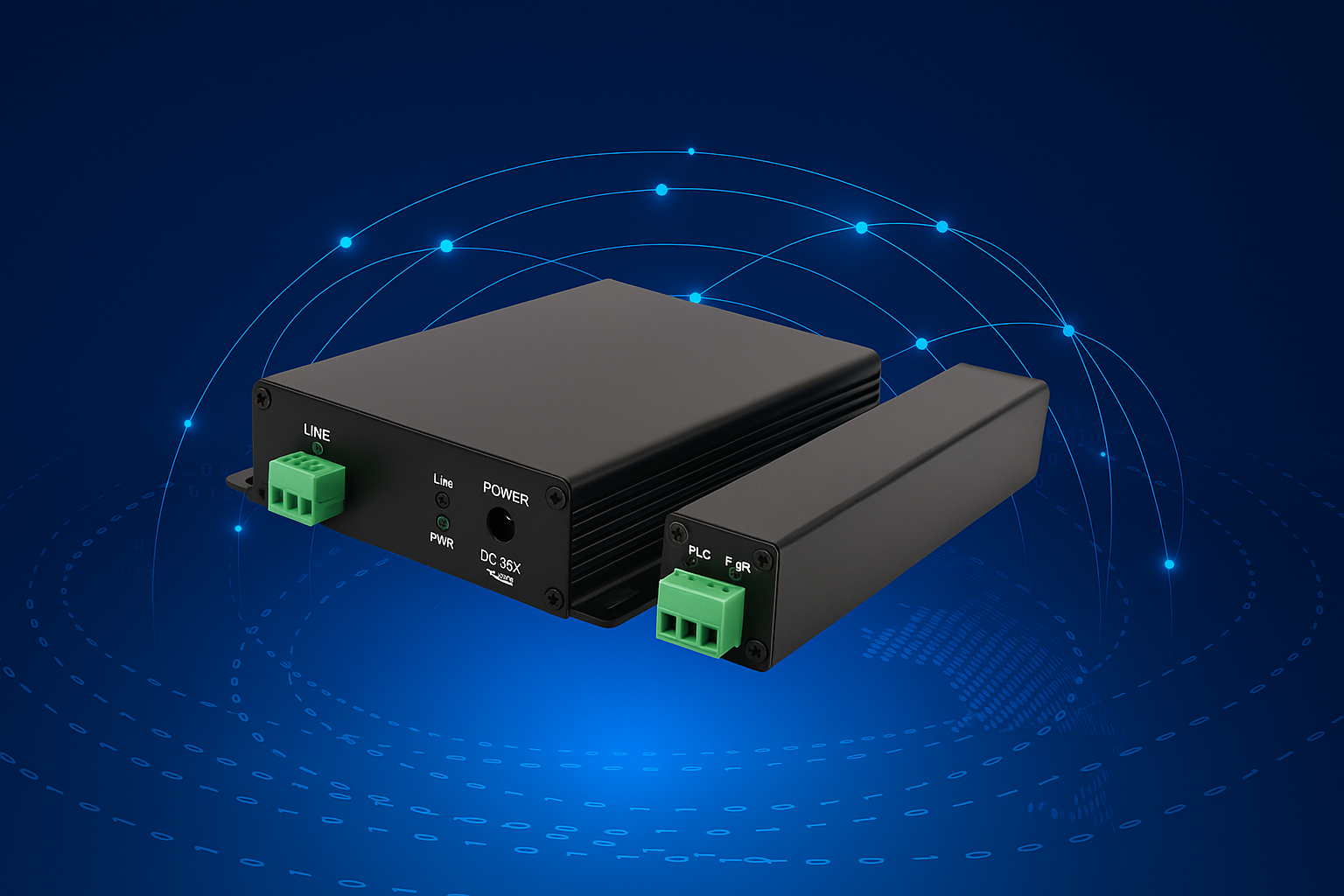
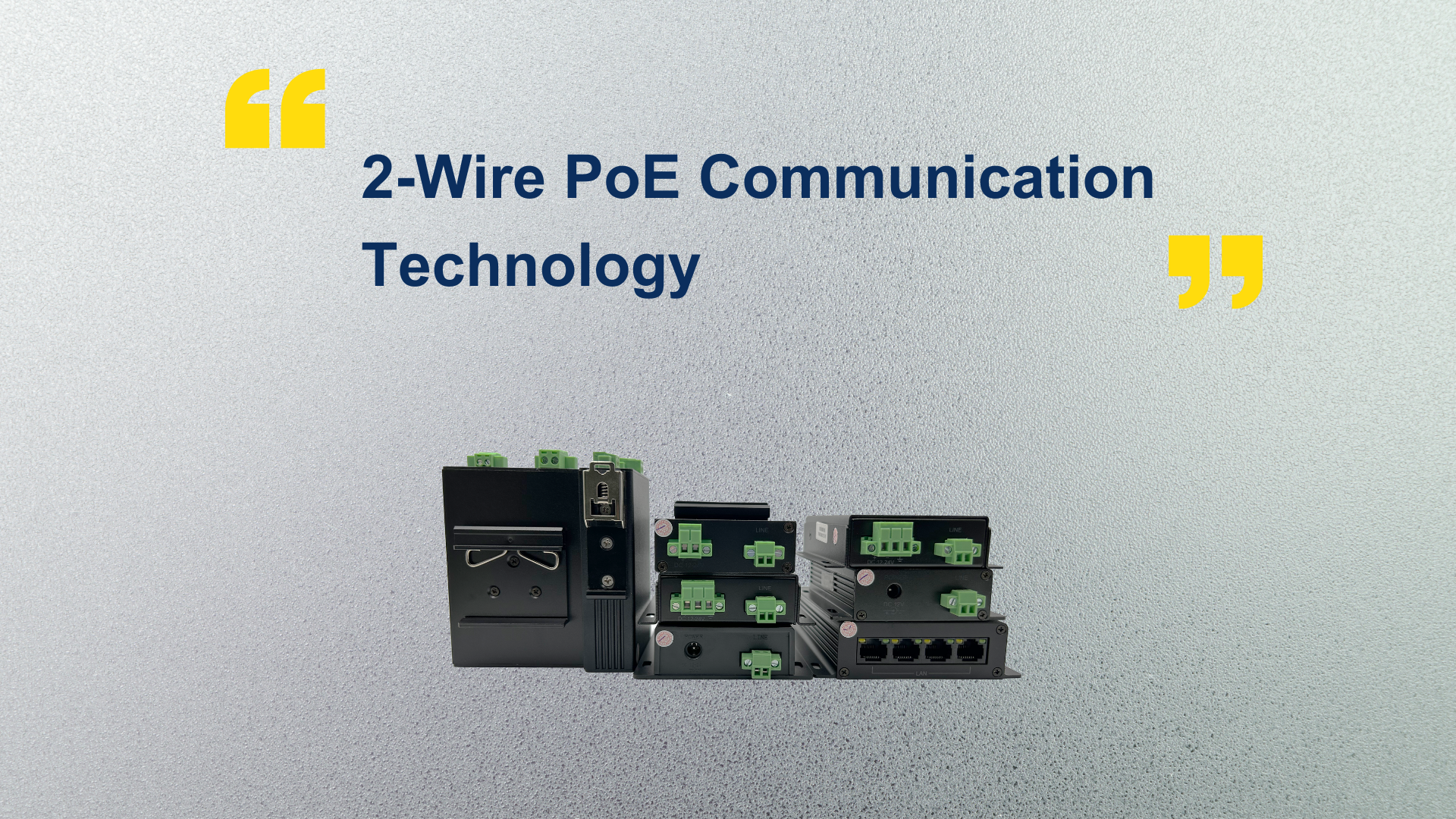
The first is controller-to-network connectivity. An SPE media converter can connect remote HVAC controllers to Ethernet switches or the BMS backbone network.
The second is sensor-to-controller connectivity. SPE can connect temperature, humidity, CO₂, pressure differential, and air quality sensors to controllers or edge gateways.
The third is existing 2-wire reuse in building retrofits. Existing RS-485, LonWorks, or control cables can potentially be reused to upgrade legacy systems to IP communication, reducing the need for new cabling.
The fourth is long-distance HVAC equipment networking. For rooftop units, basement equipment rooms, remote AHUs, pump rooms, and large building campuses, SPE can help overcome the 100-meter limitation of traditional Ethernet and simplify the network architecture.
In the short term, SPE will not simply replace BACnet, Modbus, or RS-485. Instead, it provides a new physical-layer and IP-based upgrade path for HVAC systems.
Many building projects will continue to use BACnet MS/TP, Modbus RTU, LonWorks, and analog control systems for a long time.
However, in the long term, SPE can allow more field devices to directly join IP networks, making BACnet/IP, cloud platforms, edge computing, and unified network security management easier to deploy.
For new smart buildings, SPE may become an important option for HVAC field-level connectivity. For retrofit projects, SPE may become a practical solution for faster, lower-cost upgrades with less rewiring.
When deploying SPE in HVAC systems, contractors and system integrators should consider the following factors:
Cable type and wire gauge
Required transmission distance
Electrical interference and grounding conditions
Whether data and power need to be transmitted together
Compatibility with 10BASE-T1L devices
Whether media converters are needed for traditional Ethernet networks
BMS platform support for IP-based device management
Quality of existing cables in retrofit projects
Requirements for redundancy, cybersecurity, and remote maintenance
SPE offers clear advantages, but it still needs to be designed according to the actual building environment, device protocols, and system architecture.
As smart buildings, energy-saving retrofits, remote maintenance, and cloud-based BMS platforms continue to grow, HVAC systems are moving from traditional control networks toward more open and unified IP networks.
SPE technology enables Ethernet communication over a single pair of wires. It can reduce cabling complexity, support long-distance connections, and help reuse existing wiring, making it highly suitable for HVAC controllers, sensors, actuators, and field-level building automation devices.
For HVAC contractors, BMS integrators, and building owners, the greatest value of SPE is not simply using fewer wires. It helps old buildings upgrade more easily, makes field devices easier to network, and allows HVAC systems to be monitored, optimized, and managed more effectively.
In the future, SPE is likely to become one of the key technologies for HVAC network upgrades in smart building and green building projects.