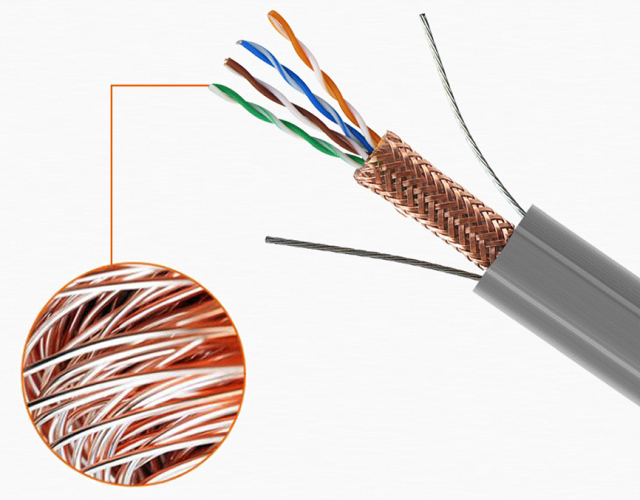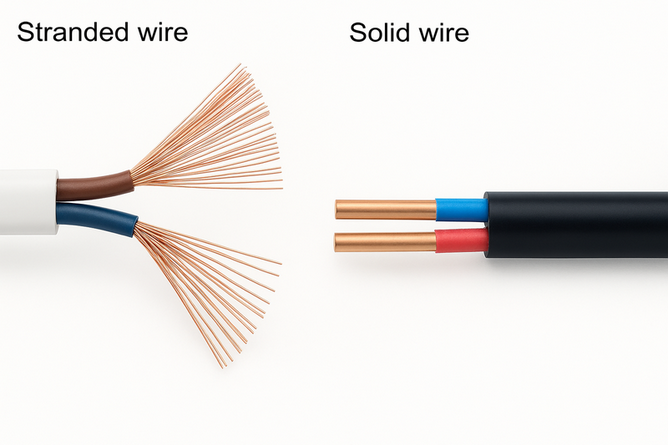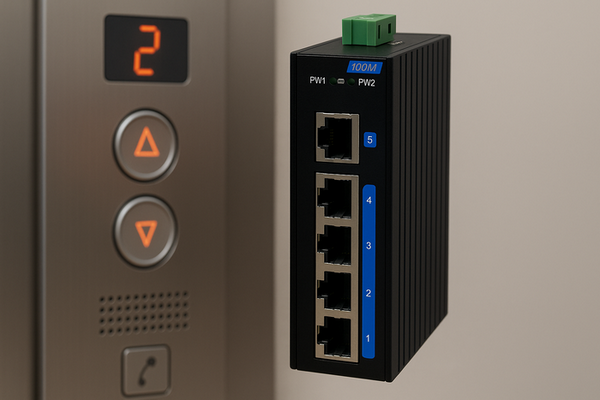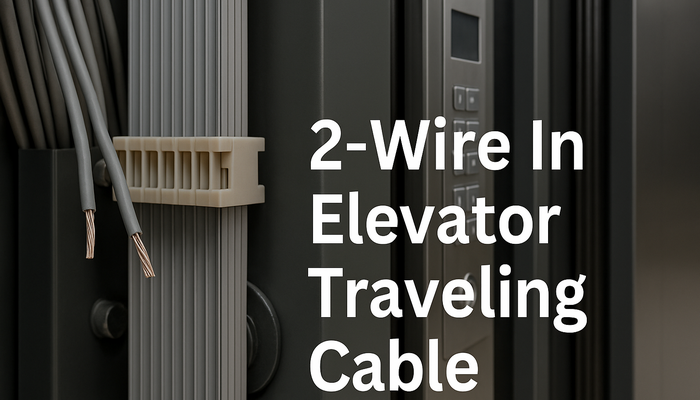
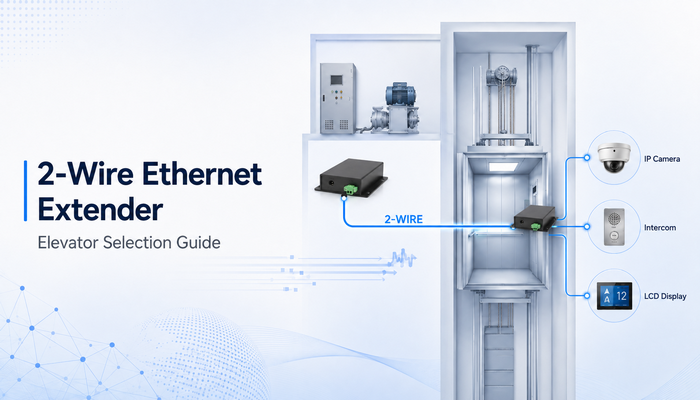
In elevator modernization projects, network transmission is often one of the most practical challenges. Many existing elevator traveling cables do not include Cat5/Cat6 Ethernet cables, but they may still have spare 2-core copper wires. Replacing the whole traveling cable can increase installation cost, extend project time, and affect normal elevator operation.
For IP cameras, IP intercoms, LCD displays, smart screens, IoT gateways, access control terminals, and remote monitoring devices, a stable network connection between the elevator cabin and the machine room is essential. This is where Ethernet over 2-wire and PoE over 2-wire solutions become valuable.
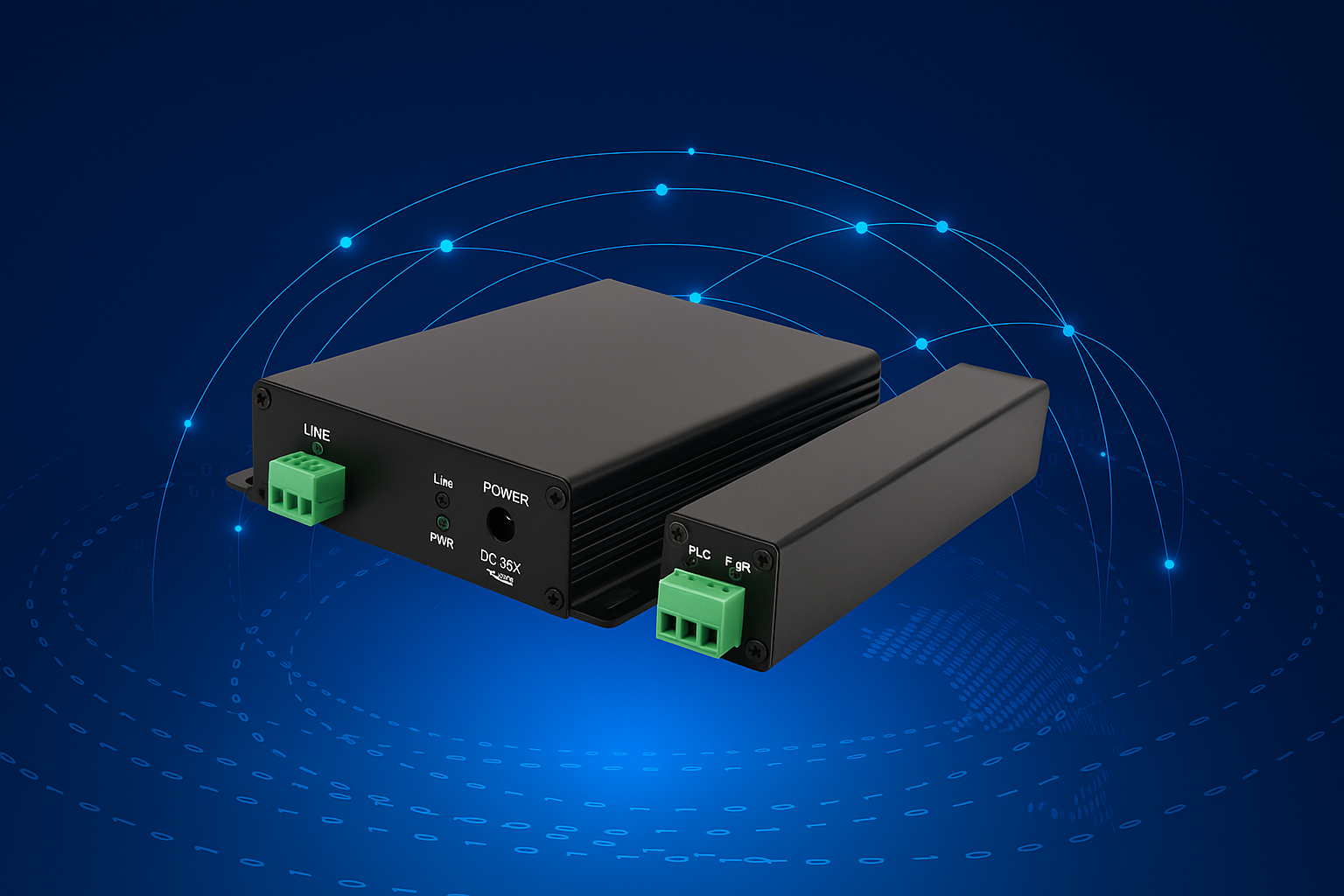
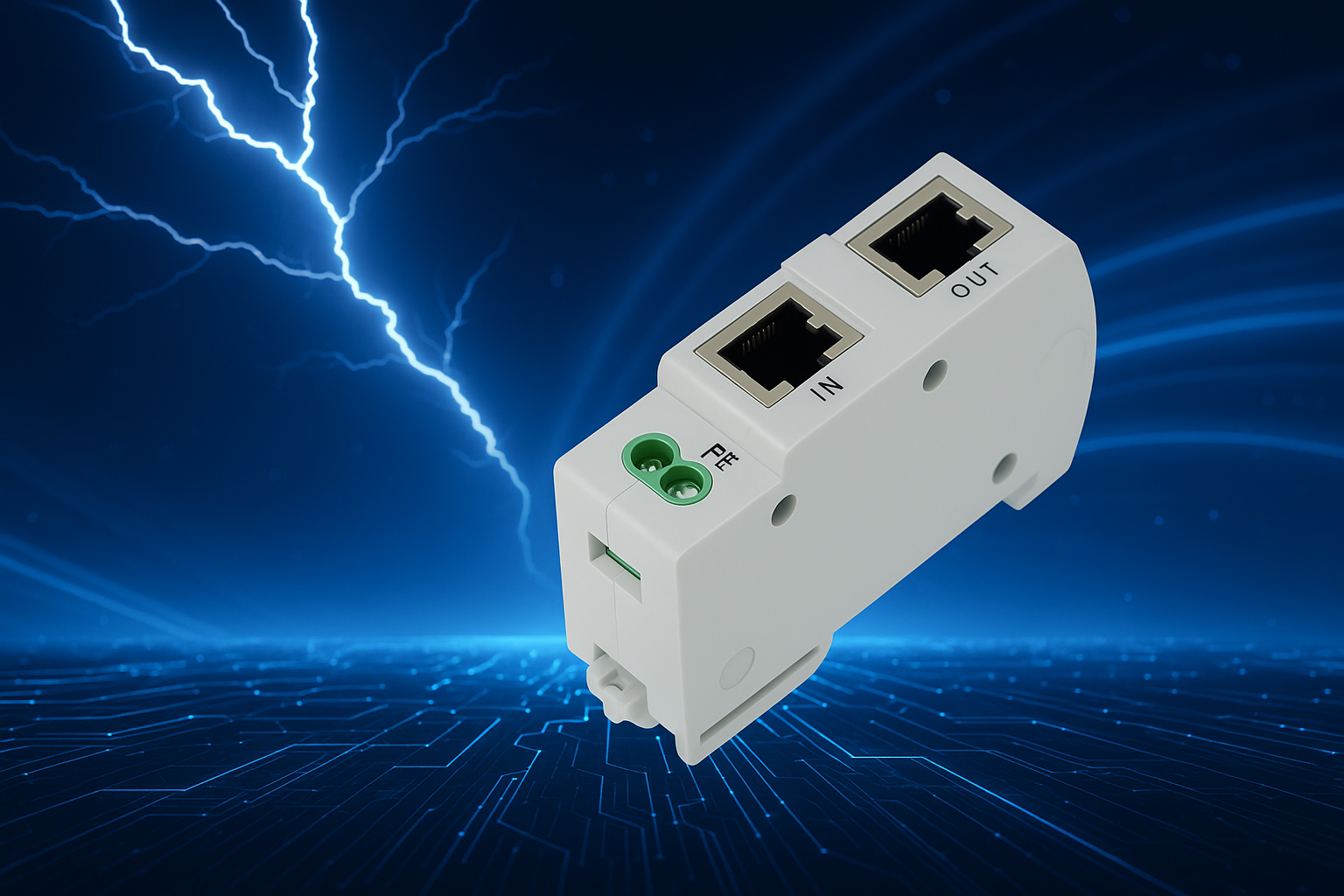
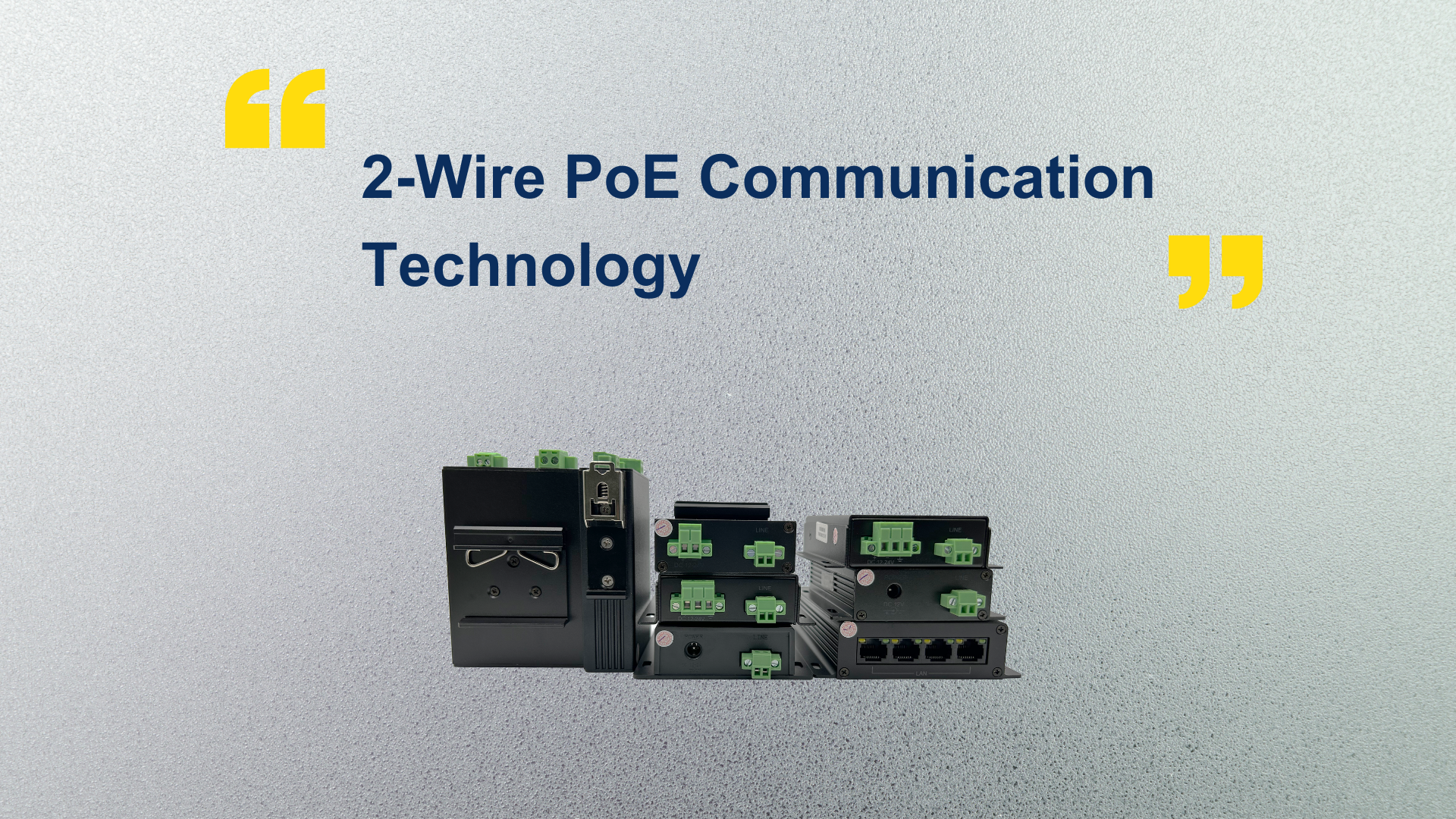
Ourten’s 2-wire Ethernet extender and PoE extender solutions are designed to reuse existing 2-core copper wiring in elevator traveling cables, helping installers build reliable IP communication without major rewiring.
However, different elevator projects require different models. The best choice depends on several key factors: whether the front-end device needs power transmission, whether it is a PoE or non-PoE device, how many IP devices are installed in the elevator cabin, and how complex the elevator shaft environment is.
Before selecting a model, the first question is simple:
Does your elevator front-end device need data transmission only, or does it need both power and data transmission?
If the device already has a local power supply, a standard Ethernet over 2-wire extender is usually enough. If the device needs to receive both power and data through the same cable, a PoE over 2-wire extender is more suitable.
This decision helps narrow down the product selection quickly.
If the elevator front-end device already has its own power supply and only requires Ethernet data transmission, Ourten’s Ethernet Extender Series is usually the right choice.
This type of solution is suitable for elevator projects where IP devices are already powered locally, but there is no Ethernet cable available between the elevator cabin and the machine room.
Typical applications include:
● Elevator IP camera with local power
● IP intercom with independent power supply
● LCD display or smart screen with DC input
● Elevator IoT gateway
● Access control terminal
● Controller communication over existing 2-wire cable
For basic IP over 2-wire transmission, OT-PLC101-N is a cost-effective option. It is suitable for projects that need to extend Ethernet signals through existing 2-core copper wires without replacing the elevator traveling cable.
For projects requiring higher stability, OT-PLC302-N is a stronger choice. It is more suitable for elevator environments where better shielding, heat dissipation, and stable long-term performance are required.
Recommended models:
| Project Need | Recommended Model |
|---|---|
| Basic IP over 2-wire transmission | OT-PLC101-N |
| Higher stability and stronger housing | OT-PLC302-N |
Elevator shafts can be complex electromagnetic environments. Motors, inverters, control cabinets, long vertical cable runs, and metal structures may affect signal stability. For elevator CCTV, IP intercom, or display systems, unstable transmission can cause video delay, disconnection, or poor communication quality.
If the elevator shaft has strong EMI, long cable runs, or demanding installation conditions, it is better to choose a more robust Ethernet extender rather than a basic model.
In this situation, OT-PLC302-N or OT-PLC602-T is recommended.
OT-PLC302-N is suitable for elevator projects that require better anti-interference performance and stable network transmission. It is a good option for IP cameras, intercoms, and display systems installed in normal to moderately complex elevator shaft environments.
OT-PLC602-T is more suitable for projects that require longer transmission distance, stronger stability, or higher-performance Ethernet transmission. It can be considered when the elevator shaft environment is more complicated, the cable distance is longer, or the project has stricter requirements for reliable data communication.
Recommended models:
| Project Environment | Recommended Model |
|---|---|
| Normal elevator data transmission | OT-PLC101-N |
| Stronger shielding and stability required | OT-PLC302-N |
| Strong EMI, longer distance, or demanding shaft environment | OT-PLC602-T |
Modern elevator cabins often include more than one IP device. A single elevator cabin may have:
● IP camera
● IP emergency intercom
● LCD display
● Smart mirror
● IoT gateway
● Access control terminal
● Remote monitoring device
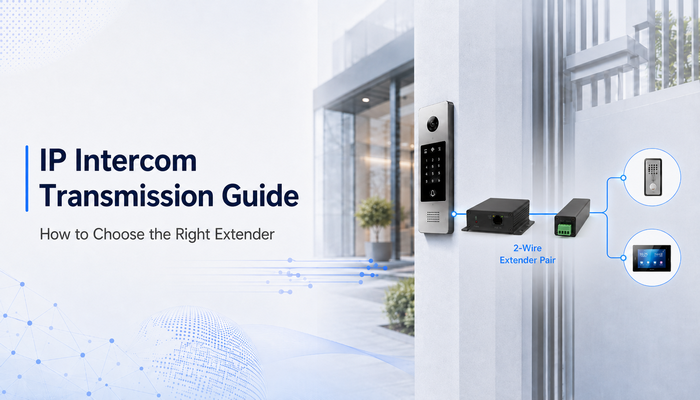
If several network devices need to be connected in the same elevator cabin, a single-port extender may not be the most efficient choice. In this case, a multi-channel Ethernet over 2-wire solution can simplify the wiring structure.
For this application, OT-PLC604-2P is recommended.
OT-PLC604-2P is suitable when several non-PoE IP devices need to share one existing 2-wire transmission line. It helps reduce extra cabling, simplify installation inside the elevator cabin, and make the network structure easier to manage.
Recommended model:
| Project Need | Recommended Model |
|---|---|
| Multiple non-PoE IP devices in one elevator cabin | OT-PLC604-2P |
If the front-end device is a standard PoE device, the project can use a PoE over 2-wire solution. This allows both Ethernet data and power to be transmitted over the existing 2-core cable.
Typical PoE front-end devices include:
● PoE IP camera
● PoE IP intercom
● PoE access control terminal
● PoE IoT device
● PoE display terminal
For this situation, Ourten’s PoE Extender Series is recommended.
A PoE over 2-wire solution is especially useful when there is no convenient power supply inside the elevator cabin, or when the installer wants to reduce separate power wiring. It can help simplify the system design by sending both network data and power through the existing 2-core cable.
Recommended models:
Not all elevator front-end devices are standard PoE devices. Some IP devices need both power and Ethernet data, but they may require DC power input instead of standard PoE input.
In this case, a normal PoE extender may not be the best match. The device needs data transmission, but the power output must match the actual input requirement of the front-end equipment.
For this situation, OT-PLC602POE-2P is recommended.
This solution is more flexible for projects where the front-end device needs power but is not a standard PoE device. It helps transmit Ethernet and power through existing 2-wire cabling while supporting applications that require non-PoE power output.
Recommended model:
| Project Need | Recommended Model |
|---|---|
| Front-end device needs power and data but is not PoE | OT-PLC602POE-2P |
Some elevator cabins may have several PoE devices installed at the same time.
If there are multiple PoE devices, using several single-port PoE extenders may make the system more complicated. A multi-channel PoE solution is usually more convenient.
For this situation, OT-PLC604POE is recommended.
This type of solution is designed for projects where several PoE-capable devices need to be connected and powered at the front end. It can help simplify the wiring structure and reduce the need for multiple independent power supplies.
Recommended model:
| Project Need | Recommended Model |
|---|---|
| Multiple PoE devices in one elevator cabin | OT-PLC604POE |
In many real elevator projects, the front-end devices are mixed. One elevator cabin may include both PoE and non-PoE equipment.
For example:
● One PoE IP camera
● One non-PoE LCD display
● One non-PoE IP intercom terminal
● One IoT gateway or access control device
In this case, using only a pure PoE solution may not be the most suitable choice, because not all devices require PoE output. At the same time, using several separate extenders may increase wiring complexity.
For this mixed application, OT-PLC604-2P/POE is recommended.
This model is suitable for elevator cabins where both PoE and non-PoE IP devices need to be connected through existing 2-wire cabling. It provides a more flexible structure for mixed device applications and helps simplify the installation.
Recommended model:
| Project Need | Recommended Model |
|---|---|
| Both PoE and non-PoE devices in one elevator cabin | OT-PLC604-2P/POE |
The following table can help elevator contractors and system integrators choose the right Ourten 2-wire transmission solution more quickly.
| Elevator Project Situation | Recommended Ourten Model / Series | Why It Fits |
|---|---|---|
| Data transmission only | Ethernet Extender Series | Suitable when front-end devices already have local power |
| Basic IP over 2-wire transmission | OT-PLC101-N | Cost-effective option for simple Ethernet extension |
| Higher stability required | OT-PLC302-N | Better shielding, heat dissipation, and reliability |
| Strong EMI, long distance, or demanding elevator shaft | OT-PLC602-N | Stronger anti-interference ability and higher-performance options |
| Multiple non-PoE IP devices in one cabin | OT-PLC604-2P | Connects multiple network devices over one existing line |
| Power + data for one standard PoE device | PoE over 2-wire Extender Series | Transmits Ethernet and power through existing 2-core cable |
| PoE IP camera or PoE intercom | OT-PLC302POE/OT-PLC302-DC | Suitable for standard PoE front-end equipment |
| Non-PoE device needs both power and data | OT-PLC602POE-2P | More flexible for devices requiring non-PoE power output |
| Multiple PoE devices in one cabin | OT-PLC604POE | Suitable for several PoE endpoints |
| Mixed PoE and non-PoE devices | OT-PLC604-2P/POE | Supports mixed front-end device applications |
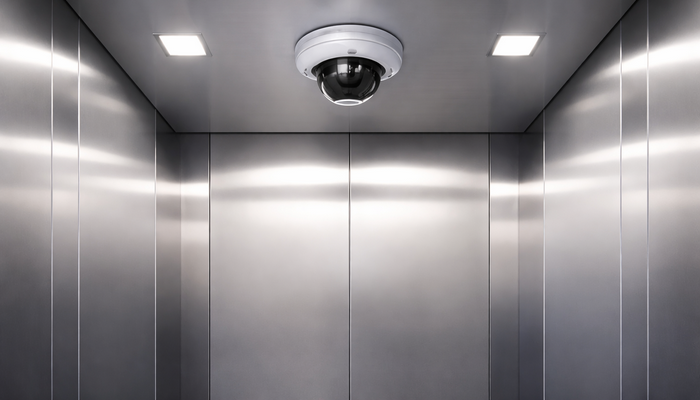
For elevator CCTV projects, the most common challenge is the lack of Ethernet cable in the traveling cable. If the IP camera already has local power, an Ethernet over 2-wire extender can be used. If the camera is a PoE camera, a PoE over 2-wire solution is more suitable.
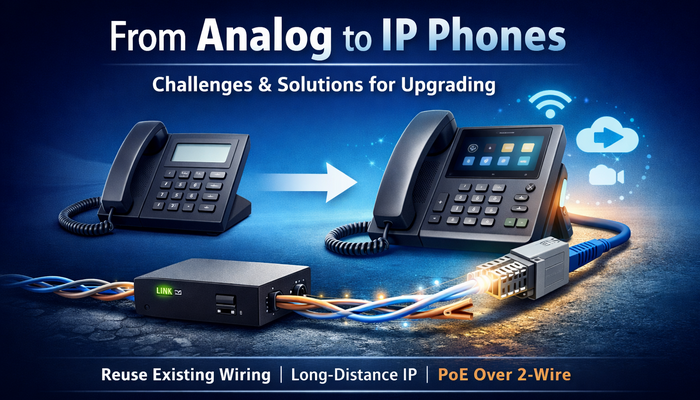
Many elevator emergency intercom systems are moving from analog communication to IP-based communication. If the intercom terminal already has power, the Ethernet Extender Series can be used. If the intercom device requires PoE, the PoE Extender Series is recommended.
Elevator LCD displays and smart screens usually require stable network access for content updates, advertisements, or remote management. If the display has its own power supply, Ethernet over 2-wire is suitable. If the display requires power from the machine room side, a PoE or power + data solution should be selected.
For IoT gateways, sensors, and remote monitoring devices, model selection depends on the number of devices, power requirements, and installation environment. For one device, a single-channel extender may be enough. For several devices, OT-PLC604-2P or related multi-channel solutions are more suitable.
Choosing the right 2-wire Ethernet extender for an elevator project should start from the actual site condition, not only from the product model.
The key questions are:
● Does the front-end device need data only, or power + data?
● Is the front-end device a PoE or non-PoE device?
● How many IP devices are installed in the elevator cabin?
● Is the elevator shaft affected by strong electromagnetic interference?
● What type of existing cable is available in the traveling cable?
Need help choosing the right 2-wire Ethernet extender for your elevator project?
Contact Ourten with your cable type, transmission distance, front-end device model, and power requirement. Our sales & technical team can help recommend a suitable Ethernet over 2-wire or PoE over 2-wire solution for your application.